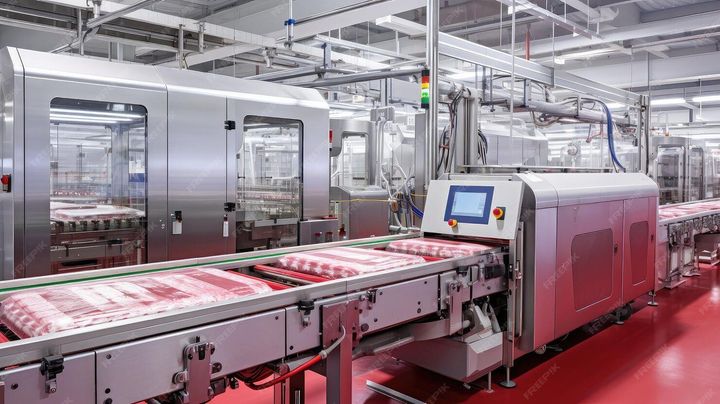
Meat Processing Machines Overview of Technology and Food Safety Systems
Meat processing machines are specialized food processing equipment designed to handle, cut, grind, mix, cook, and package meat products in a controlled and hygienic environment. These systems are used in small butcher facilities as well as large automated food production plants.
The main purpose of meat processing machines is to transform raw meat into safe, standardized, and ready-to-distribute products. They exist to improve efficiency, maintain consistent quality, reduce contamination risks, and support large-scale food supply chains.
Common types of equipment include:
-
Industrial meat grinder systems
-
Meat slicers and portion cutters
-
Bowl cutters and mixers
-
Sausage fillers and forming machines
-
Vacuum tumblers
-
Thermal processing units such as smokehouses
-
Automated packaging lines
As global protein consumption increases, the demand for advanced food manufacturing systems continues to grow. Modern meat processing machines integrate sensors, programmable logic controllers (PLC), and data monitoring tools to meet strict food safety compliance standards.
Importance of Meat Processing Machines in Today’s Food Industry
Meat processing technology plays a critical role in food safety, public health, and supply chain efficiency. With growing urban populations and expanding retail distribution networks, consistent and hygienic meat production has become essential.
Why this topic matters today:
-
Rising global demand for processed meat products
-
Increasing food safety regulations
-
Growth of export-oriented food manufacturing
-
Need for automation to reduce labor dependency
-
Emphasis on traceability and quality assurance
These machines affect multiple stakeholders:
-
Food manufacturers
-
Cold chain logistics providers
-
Retail chains and supermarkets
-
Regulatory authorities
-
Consumers concerned about hygiene and safety
Key problems solved by modern meat processing equipment:
-
Reduces contamination through controlled environments
-
Improves yield and minimizes raw material waste
-
Standardizes portion sizes and product quality
-
Enhances production speed and scalability
-
Supports Hazard Analysis and Critical Control Points (HACCP) systems
In countries like India, rapid growth in organized meat processing has increased demand for automated industrial machinery that aligns with export compliance requirements.
Recent Updates and Trends in 2025
The past year has seen several technological and regulatory developments in meat processing systems.
Automation and Robotics (2025 Trend)
In 2025, manufacturers are increasingly integrating robotics into deboning, sorting, and packaging lines. AI-powered vision systems now assist in quality inspection and defect detection.
Energy-Efficient Processing Equipment
New models released in 2024 and early 2025 emphasize lower power consumption and improved thermal insulation in smokehouses and cooking systems.
Digital Traceability Systems
Food manufacturers are adopting blockchain-based tracking solutions to ensure supply chain transparency. These systems link raw material sourcing to final packaged products.
Stricter Export Compliance
In 2025, many exporting countries updated hygiene certification requirements, requiring better documentation and automated temperature monitoring.
Sustainability Focus
Processing plants are adopting water recycling systems and waste-to-energy solutions to reduce environmental impact.
These changes show that meat processing machines are no longer simple mechanical devices. They are part of smart, connected industrial ecosystems.
Laws and Policies Affecting Meat Processing Equipment
Meat processing operations are governed by food safety and industrial standards that vary by country. In India, regulatory oversight includes guidelines issued by the Food Safety and Standards Authority of India.
Food Safety and Standards Authority of India establishes hygiene, labeling, and processing standards for meat products. Processing facilities must comply with sanitation, temperature control, and hazard prevention requirements.
Relevant policy areas include:
-
Food Safety and Standards Regulations
-
Export Inspection Council guidelines
-
Environmental pollution control norms
-
Factory safety standards
-
Cold chain compliance rules
Internationally, processors exporting to Europe or North America must follow:
-
HACCP principles
-
ISO 22000 food safety management systems
-
Codex Alimentarius guidelines
Equipment must support these regulatory requirements by enabling:
-
Temperature logging
-
Stainless steel contact surfaces
-
Easy cleaning and sanitation
-
Documentation and digital record keeping
Failure to comply can lead to penalties, export restrictions, or facility shutdowns. Therefore, selecting compliant industrial food machinery is critical for long-term operations.
Types of Meat Processing Machines and Functions
Below is a simplified overview of core equipment used in meat production facilities:
| Machine Type | Main Function | Key Feature |
|---|---|---|
| Industrial Meat Grinder | Reduces meat to uniform particle size | Adjustable plate sizes |
| Bowl Cutter | Fine chopping and emulsification | High-speed rotating blades |
| Vacuum Tumbler | Marination and protein extraction | Controlled vacuum environment |
| Sausage Filler | Portion control and casing filling | Precision volume control |
| Smokehouse | Cooking and flavor development | Programmable temperature |
| Packaging Line | Sealing and labeling | Automated conveyor systems |
These machines support high CPC industry keywords such as food manufacturing systems, industrial automation solutions, and quality control technology.
Tools and Resources for Meat Processing Operations
Several tools and digital platforms support efficient and compliant meat processing.
Regulatory and Compliance Resources
-
Official FSSAI portal for licensing and guidelines
-
ISO 22000 documentation templates
-
HACCP plan development tools
Technical and Operational Tools
-
PLC programming software
-
Temperature monitoring sensors
-
Digital production tracking dashboards
-
Predictive maintenance systems
Financial and Efficiency Calculators
-
Production yield calculators
-
Energy consumption analysis tools
-
Waste reduction metrics
Training and Knowledge Platforms
-
Food safety certification courses
-
Industrial automation training modules
-
Equipment maintenance manuals
These resources help manufacturers maintain food safety compliance while improving operational performance.
Frequently Asked Questions
What are meat processing machines used for?
They are used to cut, grind, mix, cook, and package meat products in a hygienic and standardized manner. They improve efficiency and ensure food safety compliance.
How do meat processing machines improve food safety?
They reduce human handling, maintain controlled temperatures, use stainless steel surfaces, and support HACCP monitoring systems.
Are meat processing machines regulated in India?
Yes. Facilities must follow guidelines issued by the Food Safety and Standards Authority of India and other industrial safety regulations.
What is the role of automation in modern meat processing?
Automation improves production speed, ensures consistent quality, reduces contamination risk, and supports digital traceability systems.
How often should meat processing equipment be maintained?
Maintenance schedules depend on usage, but preventive maintenance and regular sanitation are essential to meet safety standards.
Data Snapshot: Automation Adoption in 2025
Automation Level in Processing Plants (Estimated 2025)
Manual Operations: ██████░░░░ 40%
Semi-Automated Systems: █████████░ 65%
Fully Automated Lines: ███████░░░ 55%
This trend indicates steady growth in smart manufacturing technologies across the food processing sector.
Conclusion
Meat processing machines form the backbone of modern food production systems. They enable safe, efficient, and scalable transformation of raw meat into standardized products that meet consumer demand and regulatory expectations.
With increasing automation, digital traceability, and sustainability initiatives in 2025, the industry is shifting toward smarter and more energy-efficient equipment. Compliance with food safety regulations, particularly under authorities such as the Food Safety and Standards Authority of India, remains essential.
Understanding the types, functions, legal framework, and technological advancements in meat processing machinery helps businesses and stakeholders make informed decisions. As food supply chains become more complex, reliable and compliant processing equipment will continue to play a vital role in global food security.