IoT in Food Supply Chains Explanation of Smart Agriculture Technology
The Internet of Things (IoT) refers to a network of connected devices that collect, share, and analyze data in real time. In food supply chains, IoT connects sensors, GPS trackers, temperature monitors, and cloud platforms to monitor food products from farms to consumers.
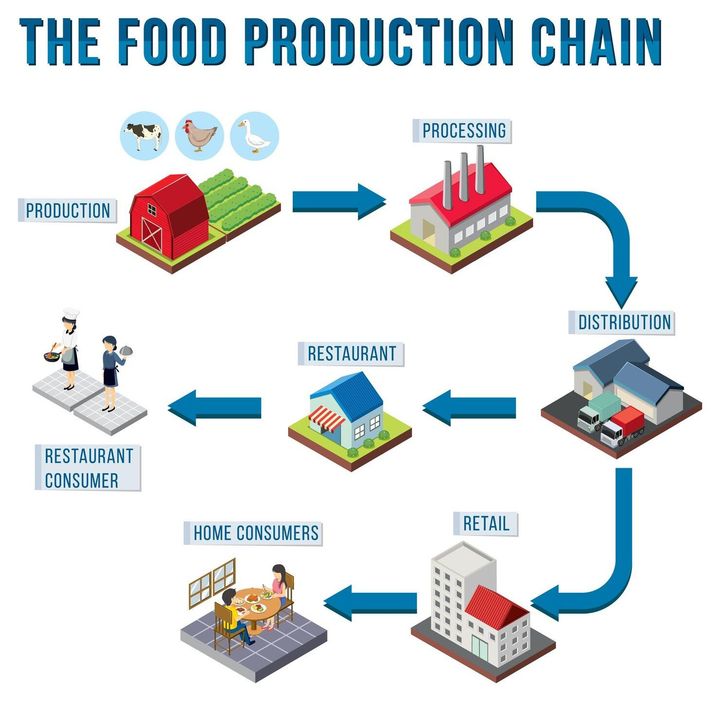
Food supply chains are complex systems involving farmers, processors, storage facilities, transport providers, distributors, and retailers. Because food is perishable, maintaining quality and safety is essential. IoT technology exists to reduce spoilage, improve traceability, and strengthen food safety compliance.
For example, temperature sensors placed in refrigerated trucks continuously monitor cold chain conditions. If temperatures rise above safe levels, alerts are triggered, helping prevent food contamination and financial losses.
IoT in food supply chains is closely linked with:
-
Smart logistics systems
-
Cold chain monitoring technology
-
Real-time inventory management
-
Food traceability software
-
Supply chain risk management
These technologies help create a data-driven food ecosystem that improves transparency and operational efficiency.
Why IoT in Food Supply Chains Matters Today
Food systems face increasing pressure due to population growth, climate change, and global trade expansion. Consumers also expect higher transparency regarding food origin, safety, and sustainability.
IoT matters because it helps solve several critical problems:
-
Reducing food waste through temperature monitoring
-
Improving food safety compliance
-
Enhancing supply chain visibility
-
Supporting faster product recalls
-
Strengthening risk management in global logistics
According to global food security reports, nearly one-third of food produced worldwide is lost or wasted. IoT-based monitoring systems can significantly reduce losses during storage and transportation.
Businesses that adopt IoT-enabled supply chain management tools benefit from:
-
Better demand forecasting
-
Automated inventory tracking
-
Reduced operational disruptions
-
Improved quality control
The technology affects multiple stakeholders:
-
Farmers using smart agriculture technology
-
Food processing companies
-
Logistics providers
-
Retail chains
-
Consumers seeking traceability
Recent Updates and Trends in 2025
In 2025, IoT adoption in food supply chains continues to grow, supported by advancements in artificial intelligence and blockchain integration.
Key trends observed in 2024–2025 include:
-
Integration of AI-powered predictive analytics with IoT sensors
-
Expansion of blockchain-based food traceability systems
-
Growth of smart cold storage facilities
-
Increased investment in food safety compliance software
In early 2025, several multinational food retailers expanded real-time tracking systems to monitor cross-border shipments. Governments in regions such as the European Union and Asia-Pacific also strengthened digital traceability requirements for imported food products.
Another significant trend is edge computing in logistics. Instead of sending all data to the cloud, smart devices now process data locally to reduce latency and improve response time during transportation.
The following table summarizes key IoT components in food supply chains:
| Component | Function | Example Use Case |
|---|---|---|
| Temperature Sensors | Monitor storage conditions | Cold chain transport |
| GPS Trackers | Track shipment location | Real-time delivery updates |
| RFID Tags | Identify and trace products | Warehouse inventory management |
| Cloud Platforms | Store and analyze data | Supply chain analytics dashboards |
| Predictive Analytics Tools | Forecast risks and disruptions | Spoilage prevention |
A simple flow representation of IoT-enabled food tracking:
Farm → Processing Unit → Cold Storage → Transport → Distribution → Retail
At each stage, sensors collect data that feeds into centralized food traceability software.
Laws and Regulatory Frameworks
IoT in food supply chains is influenced by national and international food safety regulations.
In the European Union, the General Food Law Regulation requires traceability of food products at all stages of production and distribution. Digital tracking systems support compliance with these requirements.
In the United States, the Food Safety Modernization Act (FSMA) emphasizes preventive controls and improved record-keeping. In 2024, updates to the Food Traceability Rule further encouraged the use of electronic record systems.
In India, the Food Safety and Standards Authority of India (FSSAI) promotes digital compliance systems and traceability initiatives to enhance food safety monitoring.
Other regulatory considerations include:
-
Hazard Analysis and Critical Control Points (HACCP) standards
-
Cold chain compliance regulations
-
Import-export documentation requirements
-
Data protection laws affecting cloud-based platforms
Organizations implementing IoT must ensure:
-
Data accuracy
-
Secure cloud storage
-
Compliance with national food safety guidelines
-
Proper documentation for audits
Tools and Resources for IoT in Food Supply Chains
Several digital tools support IoT-based food supply chain management.
Common tools include:
-
IoT-enabled temperature monitoring devices
-
RFID-based inventory systems
-
GPS fleet tracking platforms
-
Food traceability software dashboards
-
Supply chain analytics platforms
Examples of resource categories:
-
Government food safety portals
-
Industry compliance guidelines
-
Cloud computing platforms for logistics
-
Digital supply chain templates
-
Risk assessment frameworks
Some businesses use integrated enterprise resource planning (ERP) systems with IoT modules. These systems combine:
-
Inventory management
-
Quality control monitoring
-
Logistics coordination
-
Compliance reporting
Digital dashboards often provide:
-
Real-time shipment status
-
Temperature history graphs
-
Predictive risk alerts
-
Audit-ready compliance logs
A simplified data comparison example:
| Stage | Without IoT Monitoring | With IoT Monitoring |
|---|---|---|
| Storage | Manual temperature logs | Automated live data |
| Transport | Delayed issue detection | Instant alerts |
| Recall | Slow traceability | Rapid batch tracking |
Frequently Asked Questions
What is IoT in food supply chains?
IoT in food supply chains refers to connected devices and sensors that monitor, track, and manage food products from production to retail using real-time data systems.
How does IoT improve food safety compliance?
IoT improves food safety compliance by providing continuous monitoring of temperature, humidity, and storage conditions. It creates digital records that help meet regulatory requirements.
What is cold chain monitoring technology?
Cold chain monitoring technology uses sensors and tracking systems to maintain safe temperature ranges during food storage and transportation, reducing spoilage and contamination risks.
Is IoT expensive for small food businesses?
The initial investment varies depending on system scale. However, many cloud-based platforms offer scalable options that can suit small and medium enterprises.
How does IoT support food traceability software?
IoT devices collect real-time data, which integrates with traceability software to track batch numbers, shipment routes, and storage conditions throughout the supply chain.
Conclusion
IoT in food supply chains represents a major shift toward digital transformation in agriculture and logistics. By connecting sensors, cloud platforms, and predictive analytics tools, organizations can enhance transparency, reduce waste, and strengthen food safety compliance.
As regulatory frameworks evolve in 2024 and 2025, digital traceability and smart logistics systems are becoming increasingly important. Governments, businesses, and consumers all benefit from improved monitoring and data-driven decision-making.
IoT technology continues to shape the future of global food systems by enabling real-time visibility, efficient cold chain management, and stronger supply chain risk management. Its role in ensuring safe, reliable, and transparent food distribution is likely to expand further in the coming years.