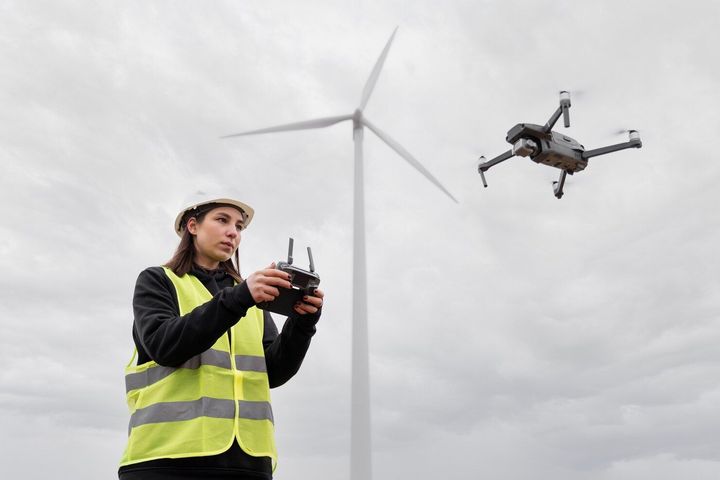
Drone Data Transmission Security Guide for Safe UAV Communication
Drone data transmission security refers to the protection of information sent between an unmanned aerial vehicle (UAV) and its control systems. This includes telemetry data, live video feeds, GPS coordinates, and sensor information transmitted through wireless communication networks.
Drones rely on radio frequencies, satellite links, Wi-Fi, and cellular networks to transmit data. Because these channels operate over open or semi-open networks, they can be exposed to cyber risks such as interception, spoofing, signal jamming, or unauthorized access.
As drone usage expands across industries like logistics, agriculture, construction, infrastructure monitoring, and defense, the need for encrypted communication and cybersecurity compliance has become more important. Secure transmission helps maintain operational safety, data privacy, and regulatory alignment.
Why Drone Data Transmission Security Matters Today
The number of commercial and enterprise drone operations has increased significantly in recent years. These drones collect high-value data such as mapping imagery, industrial inspection footage, and real-time surveillance streams.
Drone data transmission security matters because:
-
It protects sensitive aerial data from interception
-
It prevents GPS spoofing and signal hijacking
-
It reduces operational disruption caused by cyberattacks
-
It ensures compliance with aviation cybersecurity regulations
-
It supports secure cloud-based drone data storage
Industries most affected include:
-
Infrastructure and energy inspection
-
Precision agriculture
-
Smart cities and urban planning
-
Public safety and emergency response
-
Defense and border monitoring
Without proper encryption standards and secure communication protocols, drones may be vulnerable to:
-
Man-in-the-middle attacks
-
Unauthorized drone control takeover
-
Data leakage
-
Denial-of-service signal interference
Cyber risk management in UAV ecosystems now aligns with broader digital security frameworks such as zero-trust architecture and end-to-end encryption systems.
Recent Updates and Trends in 2025
Drone cybersecurity standards have evolved rapidly during 2024–2025 due to rising concerns about national security and data privacy.
Key updates include:
-
In 2024, several aviation authorities strengthened remote ID and secure firmware compliance requirements.
-
In early 2025, new encryption recommendations for UAV command-and-control links were introduced in multiple regions.
-
Growth in AI-powered anomaly detection systems for drone networks has increased since mid-2024.
-
Adoption of 5G-enabled drones expanded in 2025, raising new discussions around network security and edge computing protection.
A notable trend is the integration of blockchain-based flight logging systems for tamper-resistant data storage. Another development is secure cloud infrastructure tailored for enterprise drone fleets.
Below is a simplified comparison of traditional vs. modern drone security methods:
| Security Element | Traditional Systems | Modern UAV Systems (2025) |
|---|---|---|
| Data Encryption | Basic encryption | AES-256 & end-to-end |
| Authentication | Single key | Multi-factor authentication |
| Firmware Protection | Manual updates | Secure OTA signed updates |
| Threat Detection | Reactive | AI-based monitoring |
| Cloud Integration | Limited | Encrypted cloud platforms |
These improvements reflect a shift toward enterprise-grade cybersecurity in drone ecosystems.
Laws and Regulatory Frameworks
Drone data transmission security is influenced by aviation and cybersecurity regulations that vary by country.
In India, drone operations are governed by the Directorate General of Civil Aviation (DGCA) under the Drone Rules 2021, updated periodically. These rules emphasize:
-
Mandatory drone registration
-
Remote identification systems
-
Operational permissions through digital platforms
-
Compliance with data privacy standards
Cybersecurity-related expectations may also align with national IT laws and data protection frameworks. Organizations handling aerial data must consider:
-
Information Technology Act provisions
-
Data protection guidelines
-
Spectrum regulations for radio communication
In the United States, the Federal Aviation Administration (FAA) and cybersecurity agencies focus on:
-
Remote ID compliance
-
Supply chain risk management
-
Secure component sourcing
In the European Union, drone security aligns with:
-
EASA drone regulations
-
GDPR data protection rules
-
Network and Information Security (NIS2) directives
These frameworks aim to ensure that drone data transmission systems are secure, traceable, and compliant with national cybersecurity policies.
Tools and Resources for Drone Data Transmission Security
Several tools and platforms support secure UAV communication and cyber risk assessment.
Commonly used resources include:
-
Encrypted communication protocols such as TLS and VPN-based drone links
-
AES-256 encryption modules for secure telemetry
-
Public Key Infrastructure (PKI) for authentication
-
Secure firmware management platforms
-
AI-driven threat detection systems
Popular categories of cybersecurity tools relevant to drone networks:
-
Network vulnerability scanners
-
Secure cloud storage platforms
-
Drone fleet management dashboards
-
Intrusion detection systems
-
Compliance documentation templates
Below is a simplified framework model:
| Security Layer | Example Protection Method |
|---|---|
| Device Level | Secure boot, signed firmware |
| Communication Level | End-to-end encryption |
| Network Level | Firewall and VPN |
| Cloud Level | Encrypted storage |
| User Access Level | Role-based access control |
Organizations also use:
-
Cybersecurity risk assessment checklists
-
UAV compliance audit templates
-
Secure API gateways
-
Data encryption key management systems
These resources help reduce cyber risk exposure and improve operational reliability.
Frequently Asked Questions
What is drone data transmission security?
Drone data transmission security refers to the protection of data sent between a drone and its control or cloud systems using encryption, authentication, and secure communication protocols.
Why are drones vulnerable to cyberattacks?
Drones use wireless signals and internet-connected systems, which can be intercepted or manipulated if not properly secured. Weak encryption or outdated firmware increases vulnerability.
How does encryption protect drone communication?
Encryption converts readable data into coded format during transmission. Only authorized systems with the correct decryption key can access the information, reducing interception risks.
What is GPS spoofing in drones?
GPS spoofing occurs when false location signals are sent to a drone, potentially misleading its navigation system. Secure authentication and signal validation methods help reduce this risk.
Are there global standards for drone cybersecurity?
There is no single global standard, but many countries align drone security with aviation authority rules and national cybersecurity frameworks. Industry best practices often include strong encryption and secure firmware management.
Conclusion
Drone data transmission security plays a critical role in protecting modern UAV operations. As drones become integral to logistics, infrastructure monitoring, agriculture, and public safety, secure communication systems are essential for maintaining safety, compliance, and data integrity.
Recent developments in 2024–2025 show a clear shift toward advanced encryption, AI-driven monitoring, and stronger regulatory oversight. Governments and industry stakeholders continue refining cybersecurity frameworks to address emerging threats.
By understanding encryption standards, regulatory expectations, and available security tools, organizations and drone operators can strengthen cyber risk management and ensure responsible drone deployment in today’s connected airspace.
This educational overview highlights the fundamentals, trends, tools, and compliance factors shaping secure UAV communication systems in 2025 and beyond.