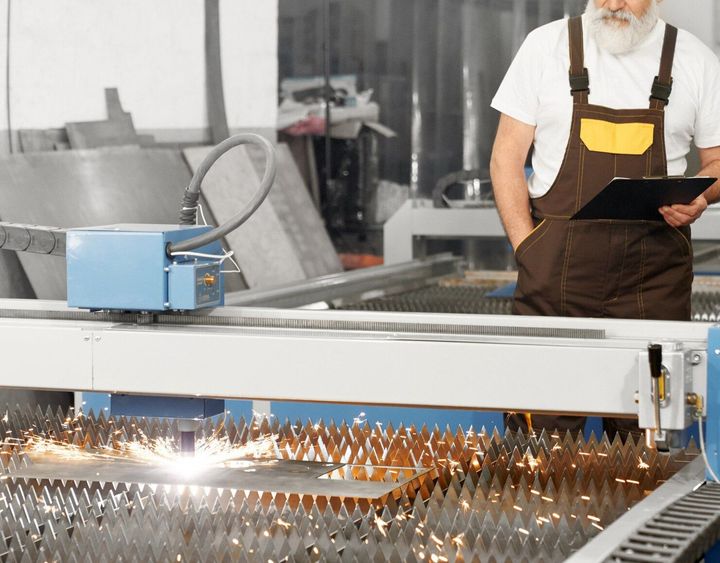
The core idea behind fiber laser technology is simple. A laser beam is created using a fiber optic medium, amplified, and then directed through a cutting head onto a material surface. The intense heat melts or vaporizes the material, while a high-pressure assist gas removes the molten residue.
These systems were developed to improve cutting accuracy, speed, and efficiency compared to traditional mechanical cutting or CO2 laser systems. As global manufacturing expanded and product designs became more complex, industries required precision metal cutting with minimal waste and consistent quality. Fiber laser cutting systems emerged as a solution to meet these modern production demands.
Why Fiber Laser Cutting Systems Matter Today
In today’s industrial environment, manufacturers face several challenges:
-
Increasing demand for precision components
-
Rising material costs
-
Pressure to improve production efficiency
-
Strict quality standards
-
Energy efficiency expectations
Fiber laser cutting systems help address these challenges in multiple ways.
They provide high-speed cutting, which reduces production time. Their narrow beam focus allows for detailed and intricate designs, especially in sheet metal fabrication and CNC machining operations. Compared to older laser technologies, fiber lasers typically offer higher energy efficiency and lower maintenance requirements.
These systems directly affect industries such as:
-
Automotive manufacturing
-
Aerospace and defense
-
Construction and infrastructure
-
Electrical equipment production
-
Renewable energy equipment fabrication
By enabling precise cuts and reducing material waste, fiber laser technology supports lean manufacturing processes. It also plays a role in digital manufacturing and Industry 4.0 integration, where machines are connected through industrial automation systems and data monitoring platforms.
Recent Updates and Industry Trends in 2025
Over the past year, several important developments have influenced the fiber laser cutting industry.
In 2025, manufacturers have continued to introduce higher wattage fiber lasers, with systems exceeding 20 kW becoming more common in heavy industrial applications. These high-power systems allow for faster cutting of thick steel and aluminum plates.
Another trend is the integration of artificial intelligence and machine learning into CNC laser cutting machines. Smart monitoring systems now analyze cutting parameters in real time to optimize performance and reduce errors. Predictive maintenance software has also gained attention, helping factories anticipate equipment issues before they cause downtime.
Automation remains a key focus. Robotic material handling, automatic loading and unloading systems, and integrated production lines have expanded across global manufacturing plants. These improvements aim to reduce manual intervention and increase workplace safety.
Sustainability has also become a significant topic in 2025. Energy-efficient laser sources and optimized gas consumption systems are being highlighted by equipment manufacturers. Environmental compliance standards in various regions have encouraged industries to adopt cleaner and more efficient laser cutting technologies.
How Laws and Policies Affect Fiber Laser Cutting Systems
Fiber laser cutting systems operate within a framework of industrial safety regulations, environmental policies, and trade standards. These rules vary by country but generally focus on safety, emissions, and energy usage.
Common regulatory areas include:
-
Workplace safety standards for laser equipment
-
Electrical safety certifications
-
Emission and ventilation requirements
-
Noise control regulations
-
Energy efficiency guidelines
For example, many countries require compliance with laser safety classifications under international standards such as IEC 60825. These standards categorize laser products based on risk levels and specify protective measures.
In industrial environments, occupational safety authorities require:
-
Proper laser enclosures
-
Protective eyewear
-
Warning signage
-
Operator training
Environmental policies may also influence how cutting gases are used and how metal waste is managed. In some regions, government programs promote advanced manufacturing technologies through incentives tied to energy efficiency and digital transformation.
Trade policies and import regulations can also impact the availability of fiber laser equipment, especially in markets with tariffs on industrial machinery.
Tools and Resources Related to Fiber Laser Cutting Systems
Professionals working with fiber laser cutting systems often rely on various digital tools and platforms to enhance productivity and planning.
Common tools and resources include:
-
CAD software for design and modeling
-
CAM software for toolpath generation
-
CNC control software
-
Industrial automation platforms
-
Production planning software
Below is a simplified table comparing common design and production tools:
| Tool Type | Purpose |
|---|
| CAD Software | Create 2D and 3D design models |
| CAM Software | Convert designs into machine instructions |
| CNC Controller Interface | Operate and monitor cutting operations |
| ERP Systems | Manage production planning and inventory |
| Maintenance Software | Track machine health and service schedules |
Online resources that support learning and industry knowledge include:
-
Manufacturing technology journals
-
Industrial automation forums
-
Engineering webinars
-
Government manufacturing guidelines
-
Industry research reports
Some companies also provide simulation tools that allow engineers to test cutting parameters virtually before applying them in production environments.
Basic Working Process of a Fiber Laser Cutting System
Understanding the process helps clarify how these systems operate in industrial settings.
-
Laser Generation
A seed laser is produced and amplified through fiber optic cables.
-
Beam Delivery
The amplified beam travels through a fiber optic cable to the cutting head.
-
Focusing
A lens focuses the beam onto a small spot on the material surface.
-
Material Interaction
The concentrated energy melts or vaporizes the material.
-
Assist Gas Application
High-pressure gas removes molten material from the cut area.
The following simplified process flow illustrates the sequence:
Design → CAM Programming → CNC Setup → Laser Cutting → Quality Inspection
Each stage plays a critical role in achieving precise and consistent results.
Advantages Compared to Other Cutting Methods
Fiber laser cutting systems offer several operational benefits:
Compared to mechanical cutting methods, there is no direct contact between tool and material. This reduces mechanical stress and improves long-term machine durability.
Compared to CO2 lasers, fiber lasers generally provide:
These features contribute to their growing popularity in industrial production environments.
Frequently Asked Questions
What materials can fiber laser cutting systems process?
Fiber laser systems are commonly used for cutting carbon steel, stainless steel, aluminum, brass, and copper. Some systems can also process certain alloys and coated metals depending on configuration.
Are fiber lasers safe to operate?
Yes, when operated according to established safety standards. Proper enclosures, protective equipment, and operator training are essential to ensure safe industrial use.
How do fiber lasers compare to plasma cutting?
Fiber lasers generally provide higher precision and cleaner edges, while plasma cutting may be used for thicker materials at lower equipment complexity. The choice depends on application requirements.
What industries rely most on fiber laser cutting technology?
Automotive, aerospace, electronics, metal fabrication, renewable energy, and construction industries frequently use this technology.
Do fiber laser systems support automation?
Yes, many modern systems integrate with robotic arms, automated material handling, and smart factory software platforms to support digital manufacturing workflows.
Conclusion
Fiber laser cutting systems have become a cornerstone of modern industrial manufacturing. Developed to meet the need for precision, speed, and efficiency, they now play a vital role in sectors ranging from automotive engineering to renewable energy production.
Recent developments in 2025 show continued innovation through higher power capabilities, smart automation, and sustainability-focused design improvements. At the same time, regulatory frameworks ensure that safety, environmental standards, and energy efficiency remain priorities.
With the support of advanced CAD, CAM, and CNC software tools, fiber laser cutting systems contribute to streamlined production processes and improved product quality. As manufacturing continues to evolve toward automation and digital integration, fiber laser technology remains a key component of advanced engineering and industrial development.