Industrial Chiller Basics: Understanding Cooling Systems for Modern Industries
An industrial chiller is a mechanical system designed to remove heat from liquids or processes and maintain controlled temperatures in industrial environments. These systems are widely used where precise cooling is essential for equipment, products, or chemical reactions. Unlike comfort cooling used in offices or homes, industrial chillers focus on process stability, operational safety, and consistent performance.
Industrial chillers exist to support modern manufacturing, data processing, and energy-intensive operations. As industrial processes generate heat during operation, uncontrolled temperatures can damage machinery, reduce product quality, or interrupt workflows. Chillers help manage this heat by circulating a cooled fluid, typically water or a water-glycol mixture, through heat exchangers connected to the process.
Importance
Industrial chillers matter because temperature control is directly linked to efficiency, safety, and reliability. Many industries rely on stable cooling to function properly, including:
-
Manufacturing and metal processing
-
Food and beverage production
-
Pharmaceuticals and biotechnology
-
Plastics and injection molding
-
Data centers and electronics
Without effective industrial chiller systems, overheating can lead to equipment downtime, material defects, and increased energy usage. In sectors such as pharmaceuticals or food processing, incorrect temperatures may also affect regulatory compliance and product safety.
Industrial chillers solve problems such as:
-
Excessive heat buildup in machinery
-
Inconsistent production quality
-
Reduced equipment lifespan
-
Energy inefficiencies in cooling operations
As industries become more automated and precise, the role of industrial chiller systems continues to expand.
Recent Updates
Over the past year, industrial chiller technology has continued to evolve in response to environmental and efficiency concerns. In 2024, manufacturers increasingly focused on low-global-warming-potential refrigerants to align with environmental targets. Variable speed compressors have also gained wider adoption, allowing chillers to adjust output based on real-time demand rather than operating at full capacity continuously.
Digital monitoring has been another key trend during 2024 and early 2025. Smart sensors and connected control systems now allow operators to track temperature stability, energy usage, and maintenance needs more accurately. Predictive analytics tools are being integrated to identify potential faults before they cause system failures.
There has also been increased attention on heat recovery features. Modern industrial chillers can capture waste heat and reuse it in other processes, improving overall energy efficiency.
Laws or Policies
Industrial chiller systems are influenced by environmental and energy regulations in many countries. In the United States, the Environmental Protection Agency regulates refrigerant usage under programs aligned with the Clean Air Act. These rules aim to reduce emissions from substances that contribute to climate change.
In the European Union, industrial chillers are affected by the F-Gas Regulation, which sets limits on fluorinated refrigerants and encourages the transition to alternatives with lower environmental impact. Energy efficiency standards under the Ecodesign Directive also influence how chillers are designed and operated.
Many countries offer government-backed efficiency programs or reporting requirements for large cooling systems. These policies encourage industries to adopt energy-efficient industrial chiller solutions and improve transparency around energy consumption.
Tools and Resources
Several tools and resources can help professionals and learners better understand industrial chiller systems:
-
Energy efficiency calculators for cooling systems
-
Refrigerant comparison charts and environmental impact tools
-
Industrial HVAC design software
-
Government energy efficiency guidelines
-
Technical standards from organizations such as ASHRAE and ISO
Example Table: Common Industrial Chiller Types
| Chiller Type | Cooling Method | Typical Applications |
|---|---|---|
| Air-cooled chiller | Ambient air | Small to medium industrial sites |
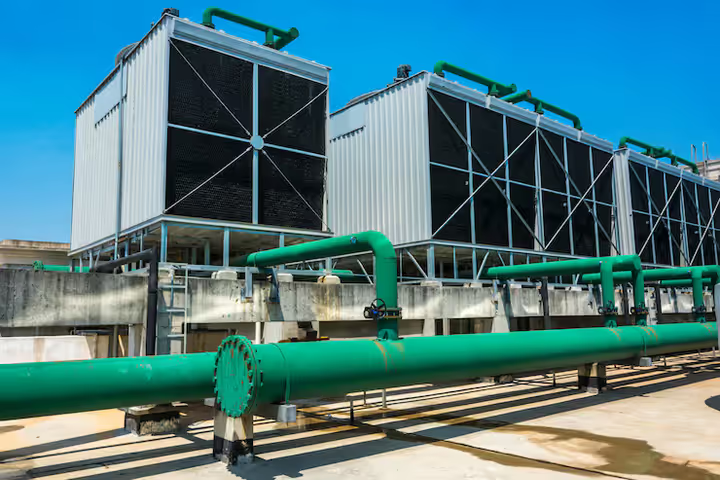
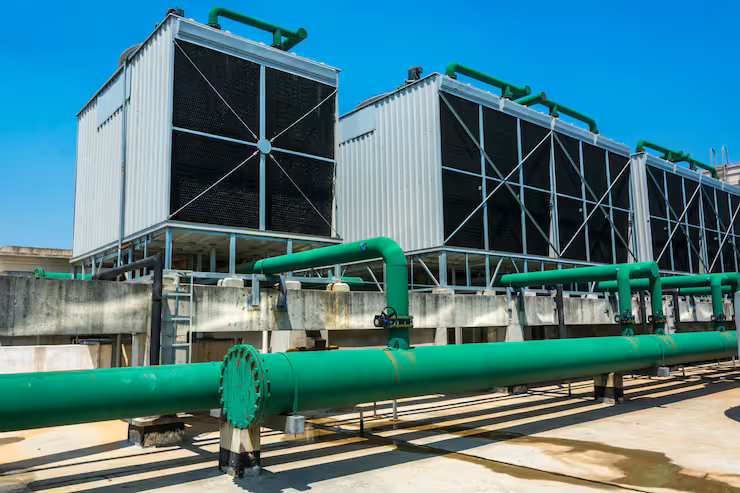
| Water-cooled chiller | Cooling tower | Large-scale manufacturing |
| Absorption chiller | Heat-driven | Facilities with waste heat |
These resources support better decision-making and system understanding without focusing on commercial transactions.
FAQs
What is the main function of an industrial chiller?
The main function is to remove heat from industrial processes and maintain a stable operating temperature for equipment or materials.
How does an industrial chiller work?
It circulates a cooling fluid through a heat exchanger, absorbs heat from the process, and releases it through a condenser using air or water.
What industries commonly use industrial chillers?
Industries include manufacturing, food processing, pharmaceuticals, plastics, electronics, and data infrastructure.
What is the difference between air-cooled and water-cooled chillers?
Air-cooled chillers use ambient air to release heat, while water-cooled chillers rely on a cooling tower and are typically used for higher-capacity applications.
Why is refrigerant choice important?
Refrigerants affect efficiency, environmental impact, and regulatory compliance, making selection a critical design consideration.
Conclusion
Industrial chillers play a vital role in maintaining temperature control across a wide range of industries. They support operational stability, protect equipment, and help maintain product quality in heat-intensive processes. As technology advances, industrial chiller systems are becoming more efficient, digitally connected, and environmentally responsible.
Understanding how industrial chillers work, why they matter, and how they are regulated provides valuable insight for engineers, facility managers, and anyone interested in industrial cooling systems. With ongoing updates in efficiency standards and environmental policies, industrial chillers will remain a key component of modern industrial infrastructure.